

Business Insurance Health Releases Two Health Cost Modeling Tools for Employers
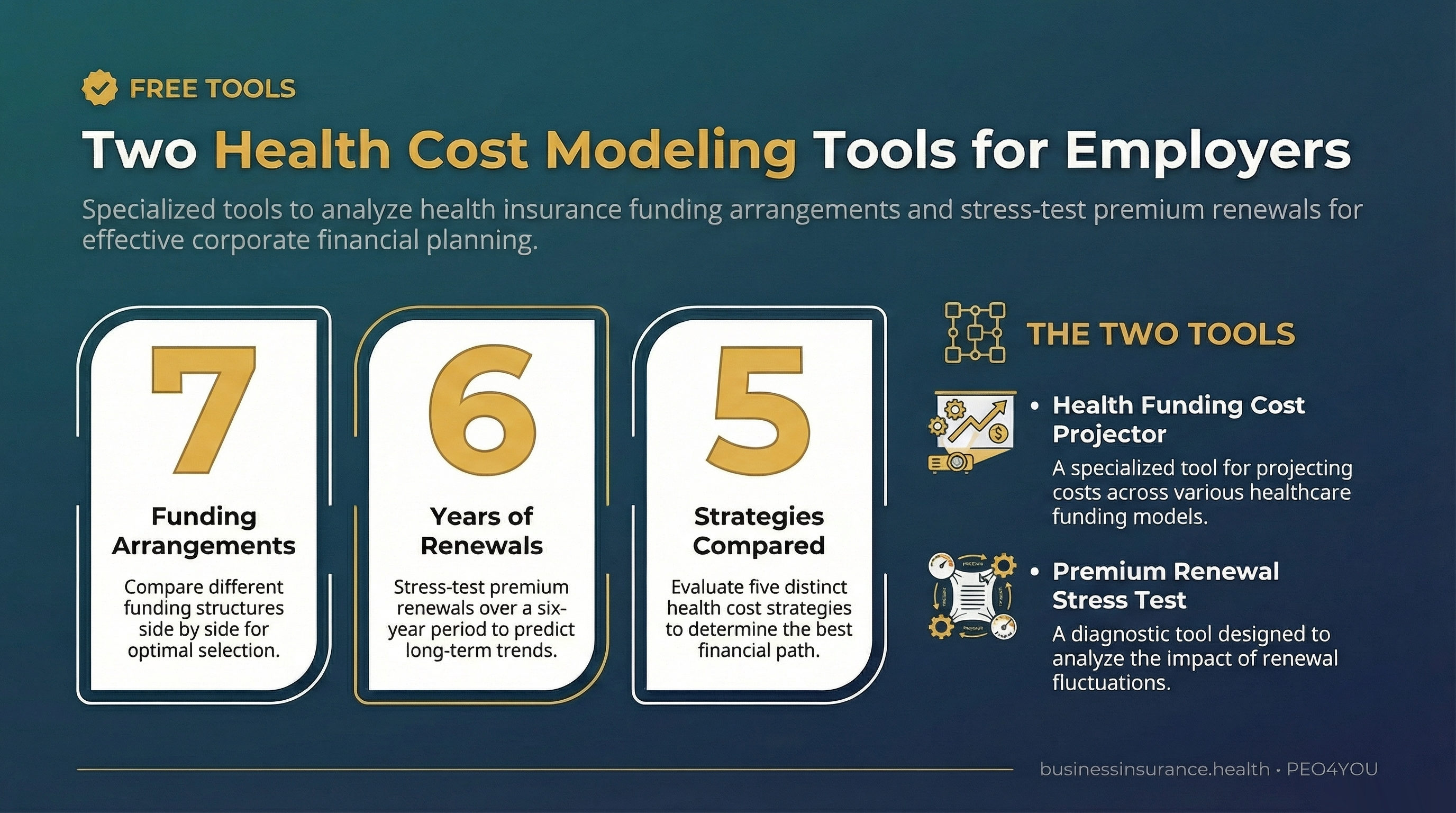
Business Insurance Health releases two health cost modeling tools — the Health Funding Cost Projector comparing seven funding arrangements and the Premium Renewal Stress Test modeling six years of renewals across five strategies.
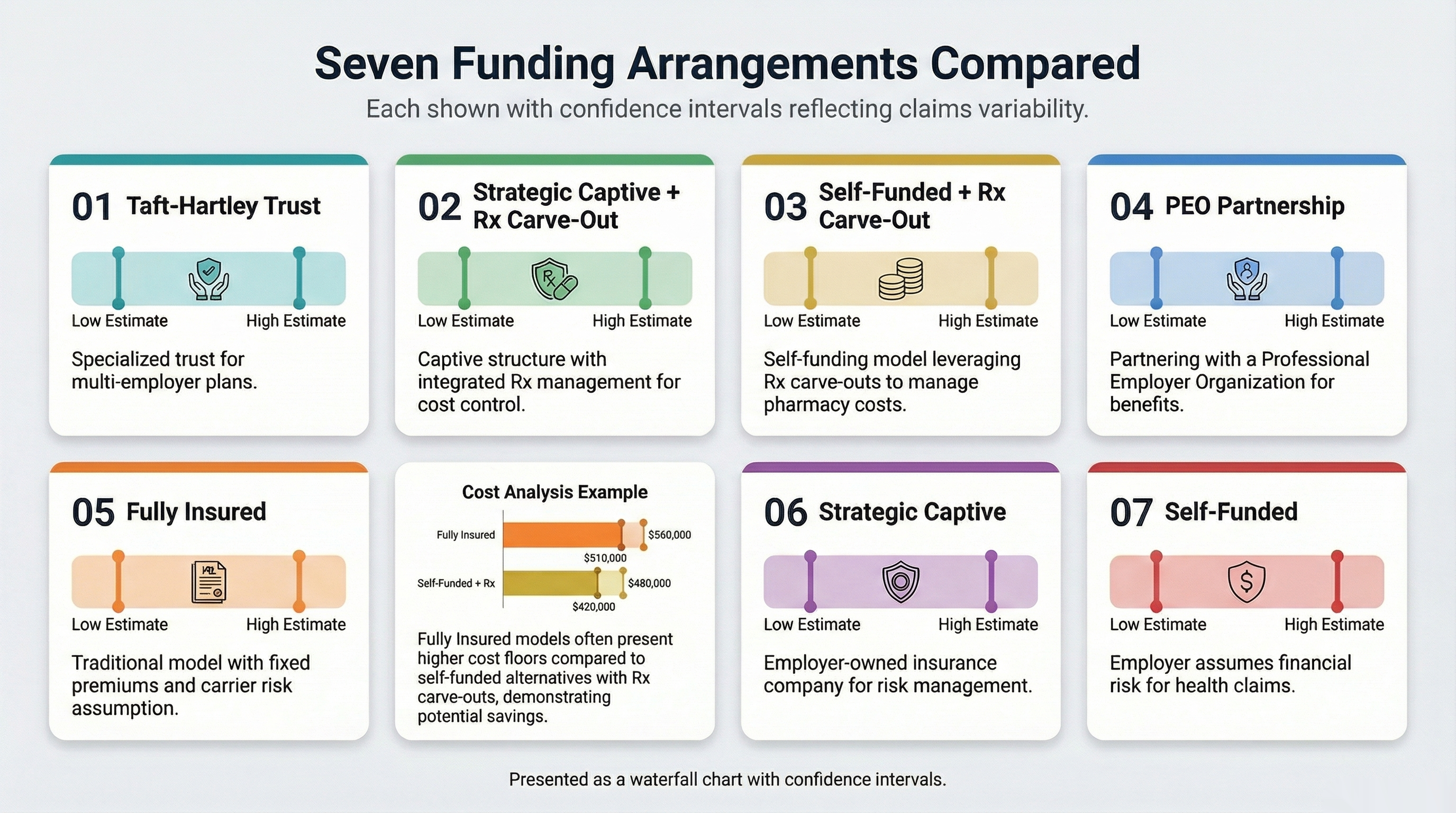
The Health Funding Cost Projector models seven funding arrangements — from Taft-Hartley trusts to fully insured plans — each shown with confidence intervals reflecting claims variability.
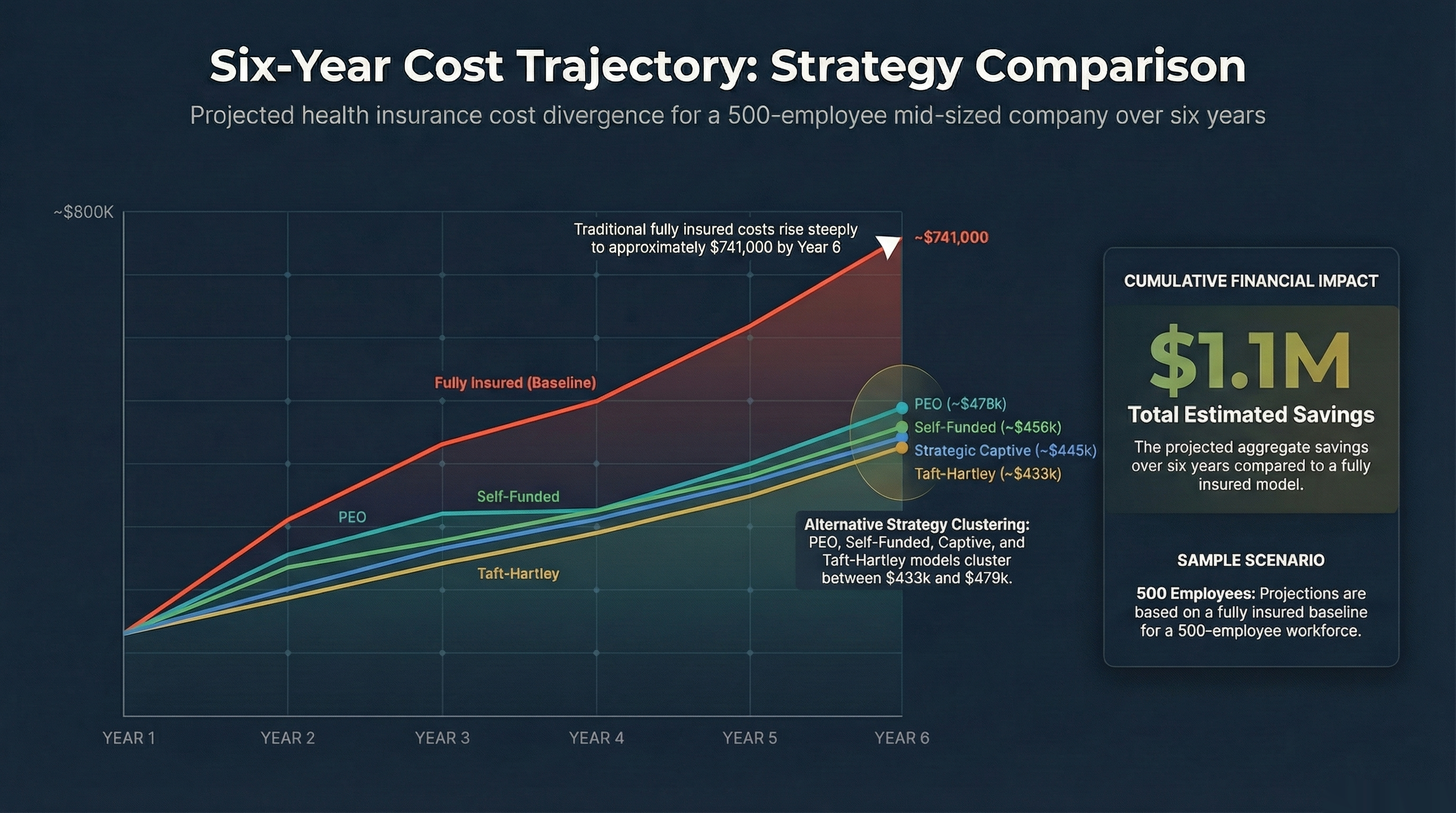
Sample six-year cost trajectory from the Premium Renewal Stress Test showing estimated cost divergence across four funding strategies, with fully insured costs rising to approximately $741,000 by year six.
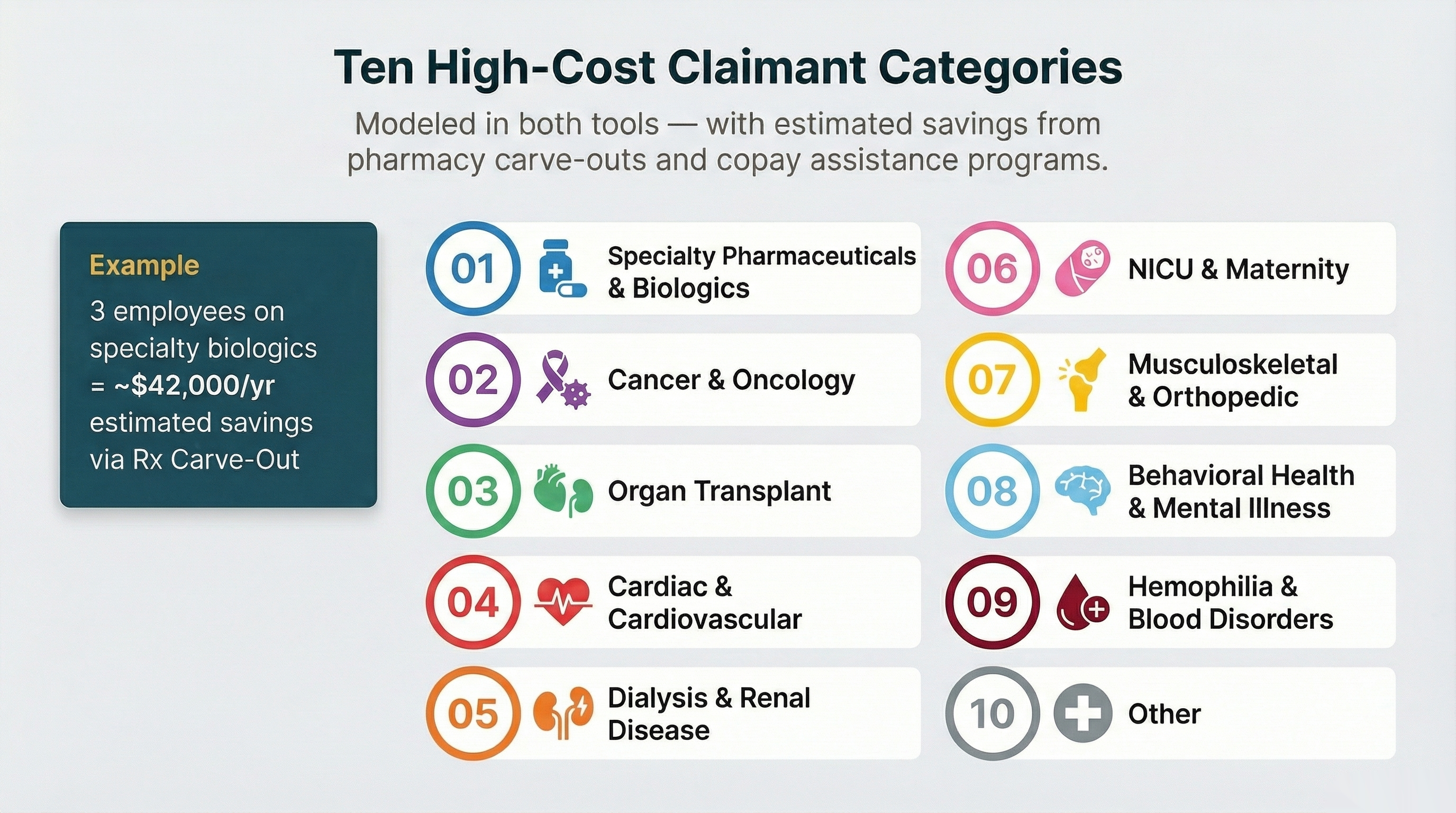
Both tools evaluate ten high-cost claimant categories — from specialty pharmaceuticals to behavioral health — and estimate potential savings from strategies such as pharmacy carve-outs.
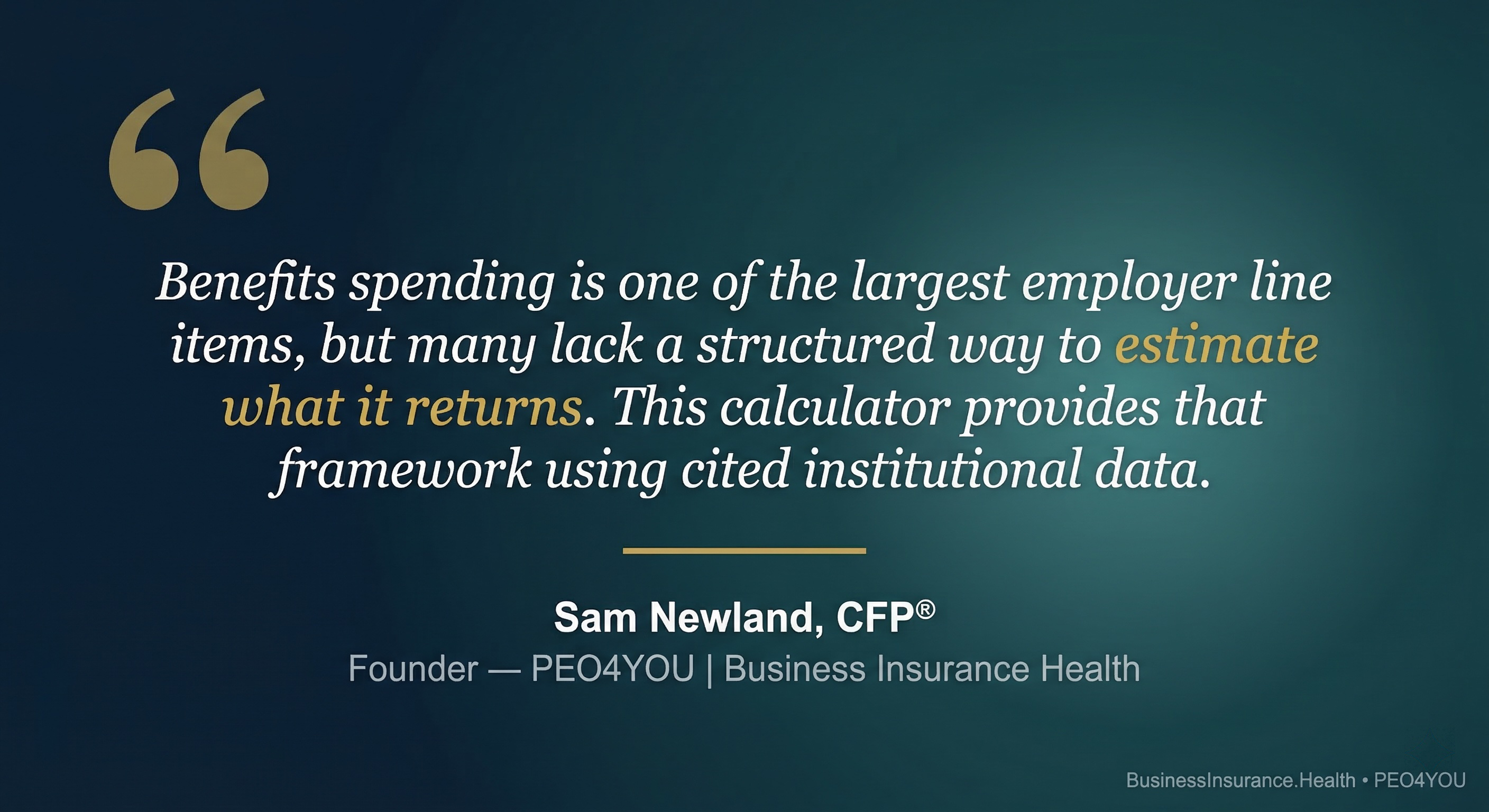
Sam Newland, CFP, founder of PEO4YOU and Business Insurance Health, on providing employers with a structured framework to estimate benefits ROI using institutional data.
Health Funding Cost Projector and Premium Renewal Stress Test offer multi-year cost modeling across seven funding arrangements
BOSTON, MA, UNITED STATES, March 26, 2026 /EINPresswire.com/ -- Business Insurance Health has released two health cost modeling tools designed to help small and mid-size employers evaluate funding strategies and project renewal costs over multiple years. The Health Funding Cost Projector compares seven major funding arrangements side by side with confidence intervals. The Premium Renewal Stress Test models up to six years of renewals across five strategies simultaneously, showing estimated year-by-year cost divergence.
Both tools are available at no cost and require no login or account creation.
Industry Context
Employer health insurance costs continue to rise. According to the Kaiser Family Foundation 2025 Employer Health Benefits Survey, the average annual premium for employer-sponsored family coverage reached approximately $25,572, an increase of roughly 7 percent from the prior year. For small employers (3 to 199 workers), renewal increases may be higher due to limited risk pooling. A 2024 Mercer National Survey of Employer-Sponsored Health Plans found that large employers projected a median cost increase of approximately 5.8 percent for 2025, while smaller firms often faced increases above 8 percent.
These trends create planning challenges for employers evaluating whether to remain fully insured, transition to self-funded or level-funded arrangements, join a captive, or explore Taft-Hartley trust structures. The two tools released by Business Insurance Health are intended to support that evaluation process.
Health Funding Cost Projector
The Health Funding Cost Projector walks employers through a five-section input wizard. Section one captures company profile information. Section two collects employee census data in three modes: a health estimate slider (excellent, good, average, below average, or high risk), file upload of actual census data, or manual entry.
Section three asks about high-cost claimants. The tool lists ten categories: specialty pharmaceuticals and biologics, cancer and oncology, organ transplant, cardiac and cardiovascular disease, dialysis and renal disease, NICU and maternity, musculoskeletal and orthopedic conditions, behavioral health and mental illness, hemophilia and blood disorders, and other. For each category where the employer has affected employees, the tool captures the number of claimants and estimates potential savings from strategies such as pharmacy carve-outs and copay assistance programs. For example, an employer with three employees on specialty biologics may see an estimated annual savings of approximately $42,000 via a pharmacy carve-out.
Section four presents the funding arrangement comparison. The tool models seven approaches: Taft-Hartley trusts, strategic captive plus pharmacy carve-out, self-funded plus pharmacy carve-out, PEO partnerships, fully insured plans, strategic captive alone, and self-funded alone. Each arrangement is shown with a confidence interval reflecting the variability that comes from claims randomness. For example, a fully insured estimate might range from approximately $510,000 to $560,000, while a self-funded arrangement with stop-loss might range from approximately $420,000 to $480,000.
The comparison is presented as a waterfall chart showing how costs step down from the highest-cost arrangement through each alternative. This visualization illustrates the trade-off between premium stability (fully insured) and potential cost reduction with greater claims volatility exposure (self-funded or captive arrangements).
Premium Renewal Stress Test
The Premium Renewal Stress Test is designed for employers evaluating long-term cost trajectories under different claims scenarios. It models a baseline year plus up to five renewal cycles across five strategies simultaneously.
Step one captures company and plan information: current funding strategy, employee count, current premium, state of domicile (relevant because some states, such as Massachusetts, have community-rating requirements for small groups), and current health profile.
Step two collects high-cost claimant information using the same ten-category framework described above.
Step three is the scenario input. Employers select year-by-year claims conditions using drop-down menus: high-cost claims event, percentage increase (mild, moderate, or significant), stable, or decrease. This creates a multi-year scenario where some years include shocks and others do not.
The tool then estimates year-one costs for five strategies: fully insured, PEO, self-funded, strategic captive, and Taft-Hartley. The output includes a projected maximum savings figure comparing the current strategy to available alternatives. In one sample scenario, an employer on a fully insured baseline saw estimated projected savings of approximately $1,100,000 over six years via a strategic captive arrangement.
A cost trajectory chart visualizes the six-year cost divergence across strategies. In the sample scenario, the fully insured projection reached approximately $741,000 by year six, while alternative strategies clustered between approximately $433,000 and $479,000 over the same period.
The tool also produces a premium projection table ranking all five strategies by estimated six-year total cost, with per-year estimates and savings amounts for each alternative strategy.
Transition Requirements and Educational Content
Both tools include information about what is required to switch funding strategies. The stress test output displays transition requirement cards for each strategy, showing estimated lead times, minimum employee counts, enrollment windows, and specific requirements such as census audits, actuarial valuations, trust documentation, and related steps.
The stress test also includes educational content explaining the mechanics of each funding type and why renewals work differently across strategies. State-specific renewal season alerts are provided — for example, noting that in Massachusetts, carriers typically file next year's rates between April and June.
"We built these tools so employers could model their cost trajectory before signing a renewal," said Sam Newland, CFP, founder of PEO4YOU and Business Insurance Health. "Projected costs should be estimated in advance. If an employer sees a potential difference of $1.1 million over six years between strategies, that may be worth evaluating — and if they decide to stay fully insured for stability, at least the decision was informed."
ABOUT PEO4YOU / BUSINESS INSURANCE HEALTH
PEO4YOU, in partnership with Business Insurance Health, is a Boston-based independent benefits consulting firm founded by Sam Newland, CFP. The firm helps small and mid-size employers access enterprise-level benefits, HR support, and cost-reduction strategies through PEOs, self-funded and level-funded health plans, captive insurance, and Taft-Hartley trusts. Its Benefits Intelligence Platform at businessinsurance.health provides employers with actuarial-grade modeling tools. PEO4YOU is part of the Newland Group Insurance family of companies and contributes to a medical debt forgiveness initiative with every client engagement.
SAMUEL DAVID NEWLAND
PEO4YOU
+1 857-255-9394
email us here
Visit us on social media:
LinkedIn
Instagram
Facebook
YouTube
X
Legal Disclaimer:
EIN Presswire provides this news content "as is" without warranty of any kind. We do not accept any responsibility or liability for the accuracy, content, images, videos, licenses, completeness, legality, or reliability of the information contained in this article. If you have any complaints or copyright issues related to this article, kindly contact the author above.
